I am a member of several relevant social media groups and often see posts asking for recommended reading, or for sources of information. It is not too long ago that the possibility of our children having autism crossed our minds again, particularly with the different profiles within the autism spectrum, and that prompted me to search out further reading, which I thought I might share with you here:
YOUR Autism MAGAZINE
I signed up to The National Autistic Society after my eldest was diagnosed, particularly because we needed something physical he could have with him that was official and let people know some of his difficulties without him having to explain anything. The membership came with an autism card which he can carry with him if he needs to. I digress.....The magazine is quarterly and delivered to your door as a part of your membership (we paid £8 a year I believe). I honestly don't find magazines generally relevant, but this magazine covers a wide range of issues and offers advice within its' covers. There are also advertisements from specialist providers, which is something I have also found extremely useful as generally I find that adding 'autism' to a listing instantly adds £s.
This particular issue is the Winter 2017 issue and features Anne Gegerty from the TV programme The Chase, talking openly about having Asperger's syndrome and how it has affected her, whilst showing a strong, positive outcome as well. There is also an article by a mum on how she managed her feelings after her son's diagnosis- another common thread on social media, which I fully understand and am still working through with my eldest daughter's diagnosis as I await the full report.
Aspergirls by Rudy Simone

I bought this book before taking my eldest daughter to the GP with my concerns, and before I had even considered she may also have autism. So much of the Asperger's syndrome profile seemed to fit her that I wanted to read more about it and see if I could help her in any way. This book has a lot of information about different life stages and experiences, with examples of how they can be handled by the person with Asperger syndrome and parents too. The golden page of the book for me came at the very end, the Appendix. This is a table of all the traits of Asperger syndrome and I was able to read through it, putting specific challenges and incidents for my daughter by each trait listed. It was a real eye opener but didn't leave me hanging with nowhere to turn, because the book itself addressed the vast majority of these too. I would thoroughly recommend this to anyone who has/suspects they may have Asperger syndrome, and to those who have a loved on with Asperger syndrome. The book is Aspergirls because the profile of Asperger syndrome in girls is so different to that in boys that girls often go undiagnosed. Women are generally more social in nature, so develop 'masking' techniques at a younger age, becoming to skilled in this and social mimicry that they can appear neurotypical at an assessment or appointment unless the people there know exactly what to look for. I found it extremely useful to print a copy of this appendix from the website
http://aspergirlsociety.org/female-as-traits/ and jot examples by the traits listed, then included this with my forms to CAMHS (child and adolescent mental health services) when raising my concerns and requesting an autism spectrum disorder assessment.
I should also mention that currently, Asperger syndrome does not feature in the diagnostic manuals used in the USA and referred to in the UK, so a diagnosis of high functioning autism is given instead. For any research/seeking support, high functioning autism and Asperger syndrome are synonymous. I would recommend purchasing this book, rather than borrowing it if you anything like me as I needed to jot down notes as I went through it, highlight sections that rung so true they could have been written about my child, and have returned to it since reading it the first time.
Can't Eat, Won't Eat by Brenda Legge
My youngest was always happy to try most things, but once she tried something and decided- for whatever reason- that she did not like it, that was it. Never again.
Early on, as a baby, she was difficult to give a bottle to, a 'sicky baby' and so we weaned her as early as was safe to do so. Even then she would have a little plastic spoon for her, and one for us, with the one for us barely ending up in her mouth, hers invariably on the floor several times over and her using her hands to eat. Not a problem.
Not long after we moved she began to become noticeably fussier, to the point that she ended up only eating cheap tinned spaghetti hoops, cheese and tomato pizza- only a particular brand and size, a certain sugary cereal and pop to drink. She could be persuaded to eat a Mc Donalds happy meal, on days we could get her out of the house, but eating became a real problem for her, and caused me great concerns. I was as sure as I could be that there was nothing physical preventing her from eating, so we had a full sensory profile and allergy test carried out. The sensory profile picked up a whole lot of issues for her, and offered strategies for us too, which we are still implementing and will continue to do as long as she will let us. The allergy test came back with allergies that I had suspected from her symptoms of mouth ulcers, bloating, red itchy skin in patches and tiredness. Whilst waiting for the results of these tests, I bought and read this book, which offers a lot of common sense approaches to helping your child to eat- I say common sense approaches because a lot of them are what would be considered normal approaches for any child, but in the panic of having a child who is not eating for whatever reason, as parents, I think we go into panic mode rather than common sense mode, so this book is useful for returning you to basics and working through possibilities to help your child. I particularly liked the case studies within the book, and found some of these directly relevant to our situation with our other children as well as with our youngest. It is also very reassuring to know that there are many other parents out there with the same daily struggles over food and eating going on, and that there are places to go for further advice. We use some of the strategies from this book alongside the altered allergy free diets we have here and have seen a marked improvement overall. She is still 'fussy' and some days feel like we have taken three steps backwards, but there is hope.
I would also recommend a sensory profile to any parent who has a child who is struggling to eat. We did not realise the implications that her sensory processing difficulties could have on every aspect of her life, including eating and food. In order to have a full profile carried out, you need to find an occupational therapist who has completed a post graduate qualification in sensory integration. I know this differs around the country (and within our own county depending on what your surname is it seems) so you may be able to access this through the NHS or you may need to pay privately. We had to pay privately for two of our children, and will be returning in the new year for a sensory profile of our third child, and they are worth every penny for the insight you get into your child's world and ways in which you can help them.
Pathological Demand Avoidance Syndrome. My Daughter Is Not Naughty by Jane Alison Sherwin

(image from amazon.co.uk)
This was one of many books first recommended to me when I began to realise the PDA profile fitted my son. The title itself was exactly what I had been telling people for years (obviously about my son, not daughter at the time) but reading this book made me realise just how much of my youngest daughter's behaviours were just like my son's had been, but more intense at the same age.
Mollie- the author's daughter and the focus of the book- had so many behaviours and struggles that were the same as my son's had been and continue to be, that it was very hard to read. I was in tears of relief more than once to read that he was not the only one, that there was a reason for it all, and that I had been right all along in trying to tell these professionals for seven years that I did not need another parenting course as they did not work. Until I read the book, all I had read were the clinical guidelines and traits of PDA, which were confusing me as so many crossed over with other conditions, but reading this book, and rereading sections of it, reassured me I was going down the right road. I find it much easier to understand the black and white traits and symptoms when real life examples are put to each of them as I find they can bee ambiguous otherwise.
Do not be put off by this book being about a girl, regardless of whether you have a boy or girl who has/may have PDA, this book is for you and is well worth purchasing so you can return to sections of it later.
Asperger's Syndrome for DUMMIES

I have to be totally honest and say that I have not read all of this book yet. I bought it after finding many of this series of books were very reader friendly and useful in the past, but felt a little disappointed upon first opening this particular title. I think the main reason was because I wanted to better understand my daughter, and found a heavy emphasis on men and boys here, with a chapter on how it is different to women and girls. I would have found it better, and more useful, to have examples and advice imbedded for both sexes throughout the book rather than separating it out in such a way. That said, I will be reading it over time and thought it still worth a mention for those of you who may appreciate a broad introduction to Asperger's Syndrome, with separate chapters for aspects of life with Asperger's Syndrome, simply marked advice and easy to locate sections. Another aspect that I didn't consider when buying this title was the title of it, which my daughter with Asperger's found offensive until it was explained to her that it was not calling her a dummy. It has been endorsed by The National Autistic Society and does contain a lot of information for the reader, with a section for those living with someone with Asperger's syndrome too.
Don't Worry Be Happy

This is one of those twee gift books that you get someone when you aren't sure what to buy them, or find in the charity shops, except I bought this one full price from a store, brand new, specifically for my eldest daughter. She has such low self esteem and lacks confidence in herself, as well as having a lot of worries and anxieties, yet she spotted this little book on the busy shelves of the bookshop and took an instant liking to it. As she is only young, a lot of the quotes are over her head now, but the book will last her years, long into a time when she can fully appreciate every single page inside. It is a perfect size to fit in your bag or coat pocket for when you need a little boost, or a smile, and I have found it excellent for her at raising a smile and helping her see she is not alone, in a simple way. One example of a quote inside is 'Just take the first step'- not too profound, but when you are literal and struggling to cope because of your anxiety and sensory processing difficulties, such a simple sentence is unbelievably powerful. I like to take quotes from this and send them to her on Facebook messenger now and then, particularly when she is having a tough day, or a recharging day. I would not easily recommend it for men or boys, unless they are happy with pink- as I know many are, but my son would rather eat his own arm than have anything pink near him- the colour scheme is heavily pink/purple and yellow. A perfect gift to bolster anyone's confidence and self esteem without the counselling costs.
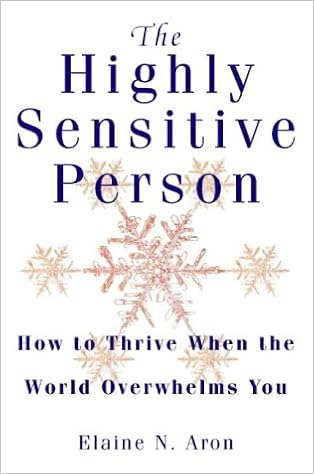
The Highly Sensitive Person by Elaine N. Aron
How to thrive when the world overwhelms you
(image from amazon.co.uk)
It had become obvious to me, from a very young age, that the world was a scary and unfair place, where promises are broken, people don't say what they mean, and they let you down. I discovered that it was extremely difficult to find someone trustworthy to speak to about these feelings and was diagnosed with a range of disorders as a result of trying. As soon as it became apparent to me that my children were finding the same difficulties in life, I found this book in a free book shop. It is not particularly about any diagnosis, but focuses more on the actual problems that are faced daily when you see the world differently to the majority of society. I read it as a parent, seeking a deeper insight into my children's world and ways I could help them deal with everyday life, but was shocked to realise how much of this applies to me too. It made sense of a lot of my own childhood and adult difficulties, something I think parents of children on the autism spectrum need to be aware of. I am under no illusions about there being a possible genetic link in autism- I strongly believe that I have autism with the Asperger or high functioning profile, the same as my eldest daughter, but have been diagnosed with so many other things along my life where doctors have missed my real struggles that I see little point now in pursuing any formal diagnosis for myself, rather focusing on my own children getting the support they need and can access now, support that I needed growing up but could never access. But I digress again...this book goes through stages of life and addresses possible issues faced by sensitive people at these times in their lives. It ends with advice for employers and teachers, sections which are invaluable when you are fighting for support for your child and not being heard.
Sadly I am not sure if this book is still widely available new, you can purchase it second hand though.
Simplicity Parenting by Kim Joan Payne MEd with Lisa M Ross
Using the extraordinary power of less to raise calmer, happier, and more secure kids
If you want to be able to help your children live as adults, in the world without any distractions from technology or trends then this book is fantastic for you. It reads similarly to an academic paper in places, but bear with it if you aim for this lifestyle.
Some people on the autism spectrum find screen time over stimulating and need nature and calming, relaxing time to recharge and access down time for their bodies and brains. These people will benefit from this book and the ideas within. It guides you towards a decluttered life and home, practicing mindfullness and being content in your life, whilst maintaining boundaries between adults and children.
I read this book from cover to cover, and it was hard going at times, requiring your full attention to fully wade through the different academic opinions, and I tried some of the suggestions from the book with our family, but soon realised that our children fall into the first category. They all respond to screen time in the opposite to the well published and preached research- they find it relaxing and it helps them to unwind, recharge and sleep. Any attempts at yoga/mindfullness/massage are met with over stimulated children who escalate very quickly here. I cannot declutter and remove any items we do not use, because they ask for them a year later and cannot understand where they have gone, why they would have gone, and why I would have changed things like that.
I fully agree with some aspects of this book, even for our family, and would love to be able to live a less cluttered life with my children being happy, but it simply would not work for us.
Also, I take issue with some of the topics and opinions about children being so different to adults, but we almost completely unschool our children, which I am aware flies in the face of most research and literature, so accept that. If your children- and you- love routine and schedules, with scheduled breaks and the minimalist lifestyle then this book is for you.
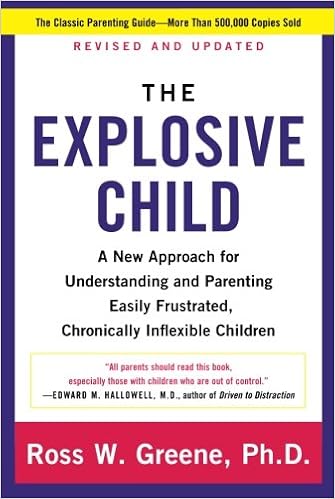
The Explosive Child by Ross Greene
(image from amazon.co.uk)
This book has completely changed the way I deal with my children's concerns, worries, demand avoidance and meltdowns. It will not be for everyone, but has worked for our house.
There are three styles of parent interactions with children discussed in detail, and examples of what not to do for each. The idea is that you read through, then try the style of parenting and see what effects and results you have in your home. For some it will already be the norm whilst for others it will be a total breath of fresh air, and for others you will find it useful as a coaster- as with any book.
Personally though, I found this book to be extremely enlightening and it addressed far more of our everyday underlying battles than any parenting course or professional ever has. It has been a few months since I really started using the strategies from this book and there has been a definite reduction in the daily challenges here, and more open conversation from the children too- something I thought I would never say. They have always known they can talk to me about anything, but I underestimated the importance of repeating their concerns to them and being able to encourage them to expand on their worries and anxieties without making it a demand. It is easy to follow and the examples are laid out in such a way that you can return to them easily to refresh your memory of the specific wording suggested (which sounds a bit odd at first but soon becomes second nature). It has allowed me into my son's world recently, which has been so important given the bullying and discrimination he has been facing.
I also have a few other books which I am not going to discuss in such detail, for various reasons:
Free to Learn by Peter Gray is one I bought when I assumed the professional sermons about screen time were blanket correct. But now I know better for sure. It does support unschooling principles and discusses reasons why this can be the better way forward in some situations, but I found it too academically written, and not relevant enough to special needs and the challenges we face here on a daily basis. If you are interested in unschooling and believe your children's thoughts and beliefs are as important as your own then it may be worth a look for you, as it does support this, as do we, but it is heavy going in my opinion and there are plenty of other books on unschooling.
60 Social Situations & Discussion Starters by Lisa A Timms
to help teens on the autism spectrum seal with friendships, feelings, conflict and more
I bought this recently, and have not had the time to fully read it yet, but have looked through the first couple of chapters. It is an interactive book, full of questions, much like a counselling session where you have to look at your own expectations and understanding of situations, but also offers advice and parent homework which I find particularly positive. My children are all slightly too young to begin working through this with them, but I aim to work through it alone first, then with them starting mid next year. I wish someone had taken the time to talk about these topics with me growing up.
No Worries by Dr Sharie Coombes
A book for children to work through alone, or with parents, to put their worries and thoughts don on paper. I bought it to work through with my son but, at age 11, he turned his nose up at it saying it is too babyish, and I can see his point so left it there. I have taken some of the ideas and activities from in this book and done them secretly with both my older children with positive outcomes for both, and would recommend this for those who are a little younger, perhaps 7-9 year olds.
Can I tell you about......
The books I would put top of my list for any parents and junior age children would be the Can I tell you about.... series. We have a few of these for different diagnoses and each of them is as useful as the next. They each give a basic and brief introduction to their diagnosis and explain, in simple terms what it means. They are printed so the left hand page is for children, with an illustration and less words, whilst the right hand page is aimed more at older children/adults with more details and examples. There are lists at the back of them for further support and they are suitable to give to a more reluctant or demand avoidant tween to read in their own time, with the assurance that any questions can be asked openly (I cannot believe I just had to add the word 'avoidant' to the dictionary on here!). These books are also excellent to give to friends/family/teachers who lack understanding and need a quick overview.The titles we have here are:
Can I tell you about Selective Mutism? by Maggie Johnson and Alison Wintgens
Can I tell you about Asperger Syndrome? by Jude Welton
Can I tell you about Pathological Demand Avoidance Syndrome? by Ruth Fidler
Can I tell you about Sensory Processing Difficulties? by Sue Allen
My only niggle is that they have either a male or female on the cover, and there is no option to change it. This was an instant barrier to my 11 year old son with PDA, but once I explained I shared his annoyance at that he was more willing to read it.
I hope you have found this useful, and please feel free to share any other books you would recommend to others who are just beginning their battles with the authorities and professionals, or who are newly diagnosed, facing questions from family and friends, or who are looking for a relevant book or magazine to read.